The standard version
Read under the board, counted, reshaped on the original paint. What most Warrensburg cars need, whatever year they are.
Warrensburg, Missouri · Johnson County · the far end of US-50
Our shop sits in Johnson County, Kansas. You are in Johnson County, Missouri. Same county name, sixty-six miles of US-50 between them, and — the part that matters — two different rulebooks for your claim.
(816) 451-1455 · Mon–Fri 8:00 AM – 5:00 PM
Warrensburg sits in Johnson County, Missouri — the same county name as the Olathe shop, sixty-six miles west in Kansas, and a different set of rules. Missouri leaves hail outside the total-loss calculation. Cars are collected from Warrensburg free, repaired on their original paint, and driven back.
There are two Johnson Counties in this story and they are not the same place. The shop is in Johnson County, Kansas, on the western edge of the metro. Warrensburg is in Johnson County, Missouri, sixty-six miles east down US-50, and that sixty-six miles crosses a state line — which is the only part of the coincidence that actually costs you anything, because it changes which law your claim runs under.
That is worth leading with, because the rest of the picture here is simple. Warrensburg is a university town of just under twenty thousand people that mostly works and studies in place. It is not a commuter suburb of Kansas City and we are not going to write about it as though it were.
What it is, for our purposes, is the far end of the map. Sixty-six miles of US-50 is the longest run we make, and it is entirely ours to make. Nothing about your estimate, your warranty or your timeline is different because the van drives further to reach you.
A university town
More arguments than dents, usually. This is a town of just under twenty thousand built around the University of Central Missouri, and a campus changes what is parked outside and who is looking at the bill.
The university is the town's biggest employer and its biggest parking problem in the same breath. Student lots fill in August and stay full, and a car that lives in a campus lot for a semester is a car with no roof over it for months at a time. When a cell crosses Warrensburg in April it does not have to find the cars. They have not moved since term started.
The rest of the town spreads along US-50 and MO-13, with the older streets around downtown and Blind Boone Park parking much as they did decades ago and the newer edges parking in driveways. Between the two, a hail event here produces a very wide spread of damage on very different cars — a four-year-old truck in a driveway on the newer edge of town and a fifteen-year-old sedan in a campus lot, both dented, both wanting an answer the same week.
That mix is why the honest advice from here is usually "get it counted before you decide anything". A student's deductible and a professor's deductible are the same number on paper and a very different number in practice, and the only way to know whether a claim is worth filing is a real dent count rather than a glance across a parking lot.
We have no verified record of any particular storm over Warrensburg and will not invent one. West-central Missouri is genuinely different weather from the Kansas City metro our climatology covers, which is exactly why this page does not borrow a metro storm and pin it on Johnson County, Missouri.
What Warrensburg does not have, and we would rather say it: a Hail Solutions presence. There is no office here, no local number, no representative. There is a van that drives out from Kansas and a bay that the car comes back from. That is the entire arrangement, and everything on this page is built on it being true.
Sixty-six miles
It is the last stop on it. Sixty-six miles of US-50 is the longest run we make, and it costs you nothing — which is easier to say than to arrange, and is the reason the arrangement is worth explaining.
We collect the car from wherever it sits — a driveway across town, a lot near campus, the street downtown — hand you a free loaner, and take it back down US-50. It is repaired in the Olathe bay where the lighting and the tooling live, then driven back to you. There is no distance charge, because the mileage is our cost of doing business rather than a line on your estimate.
What you should weigh against that is the honest alternative. Sixty-six miles is far enough that a shop closer to you may genuinely make more sense for a small count, and if someone in town can do the work properly we would rather you used them than felt trapped by a page on the internet. What we offer is a written lifetime warranty attached to a fixed address that will still be there in three years — which is a different proposition from an operator working out of a lot until the season ends.
Missouri rules
Yours, every time. The car is registered and insured in Missouri, so Missouri's definitions are the ones that decide what happens to it — no matter which Johnson County the repair happens in.
Missouri leaves hail damage out of the repair-cost sum that defines a salvage vehicle. So the dents themselves are not what pushes a car toward a branded title, and a Warrensburg car does not become more at risk by being repaired in Kansas. Where the shop sits has no bearing on your title; where the car lives does.
The number that gets argued is the estimate. On an older car — and this town runs plenty of them — the gap between a careless first figure and an accurate one is the whole conversation, because a repair number written high against a modest fair market value is what starts a total-loss discussion that the damage never justified. A real count is the answer, and a supplement corrects a first number that will not cover the work.
Missouri leaves hail damage out of the 80% repair-cost calculation that defines a salvage vehicle, so a cosmetically hail-dented car generally shouldn’t be branded a total loss on that basis alone.
Missouri sets the total-loss line at 80% of a late-model vehicle’s fair market value — but the cosmetic-hail carve-out above sits in front of it.
You choose the shop. Your insurer can’t force you to use a specific shop or make you travel unreasonably to one. They can recommend a shop — but the choice of who repairs your car is yours.
The statute and the detail: Missouri hail damage laws. If you are weighing whether to file at all, how your deductible works is the arithmetic.
This is general information, not legal advice — what applies to you depends on your policy and your carrier.
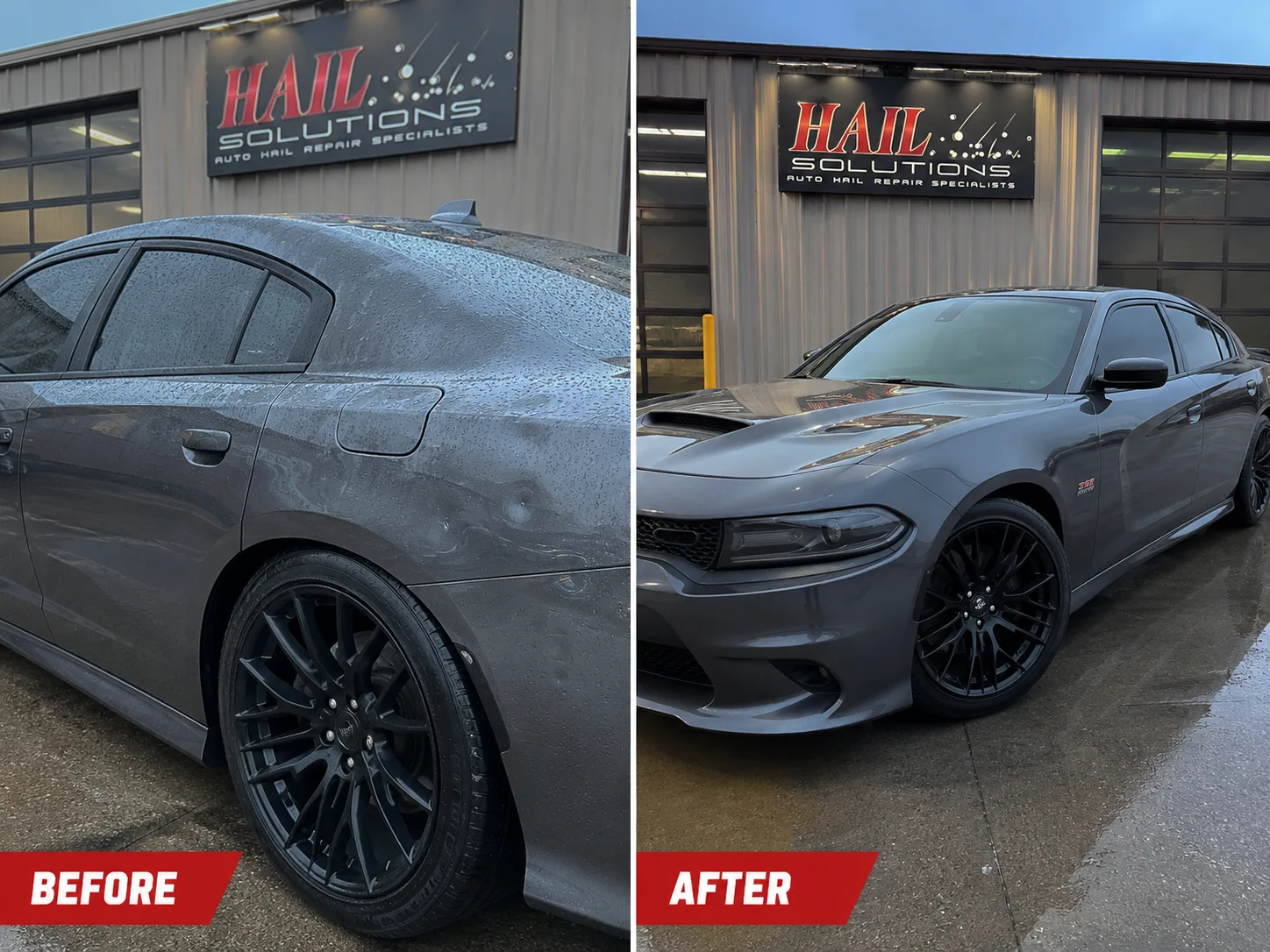
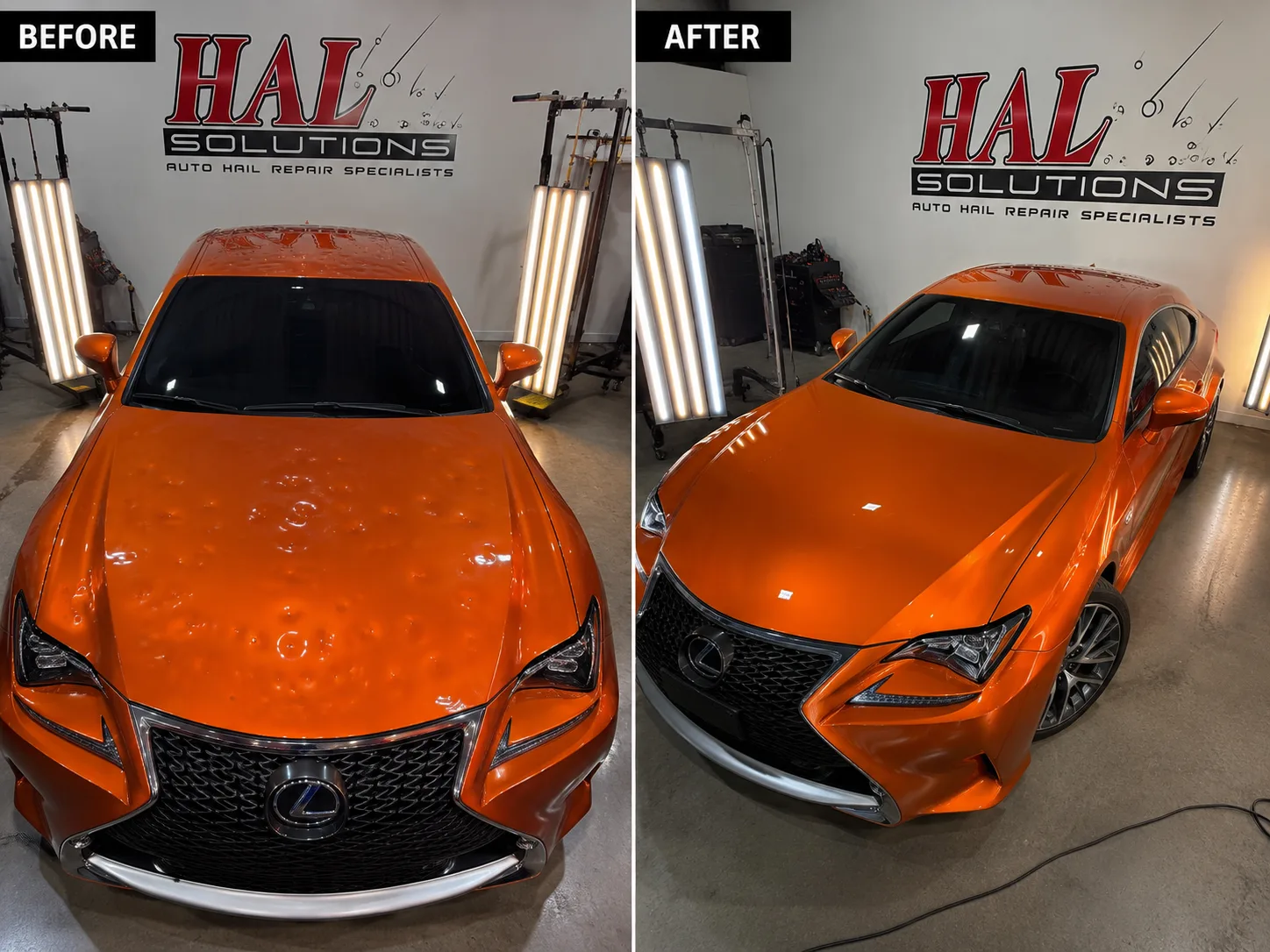
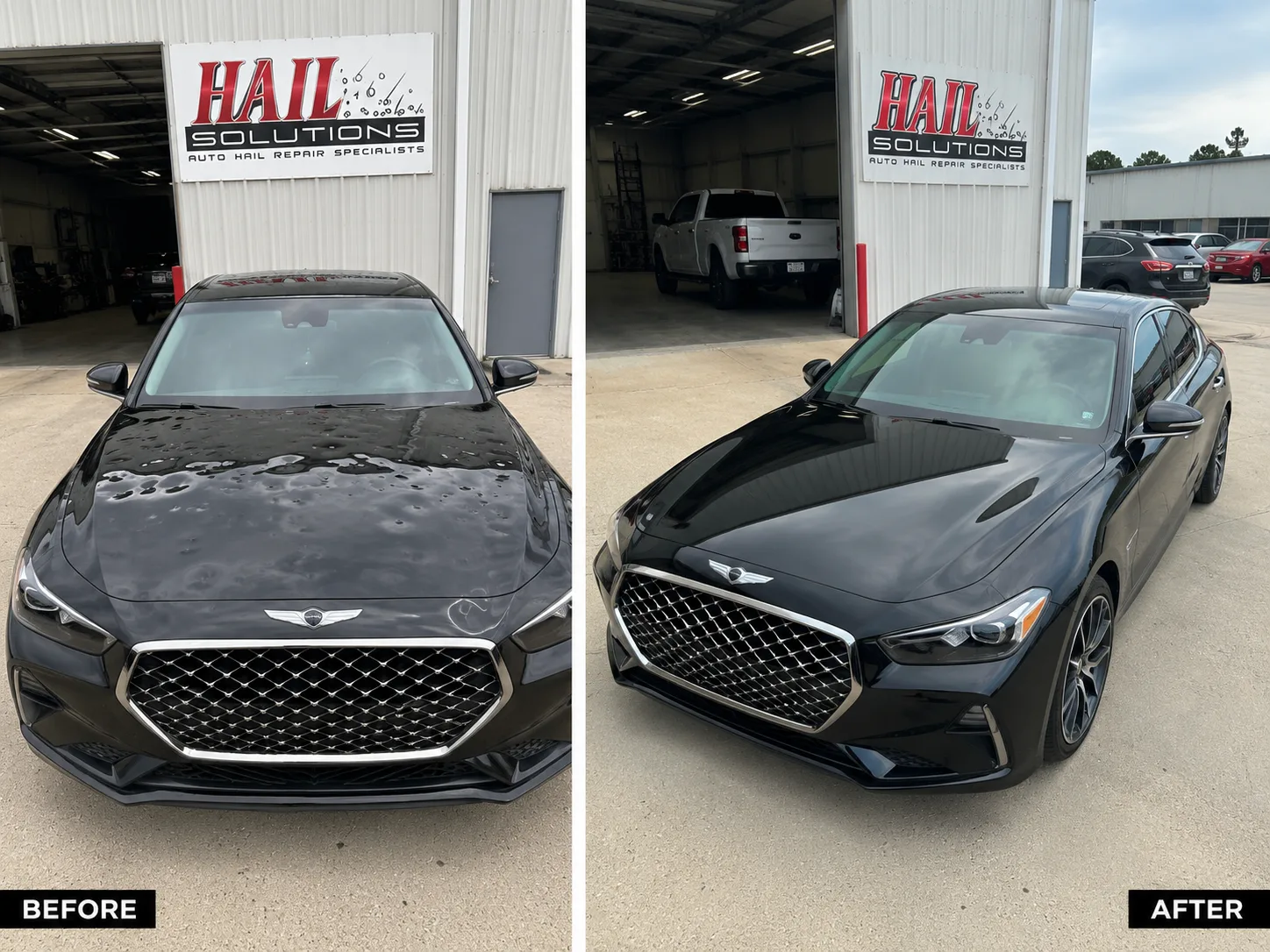
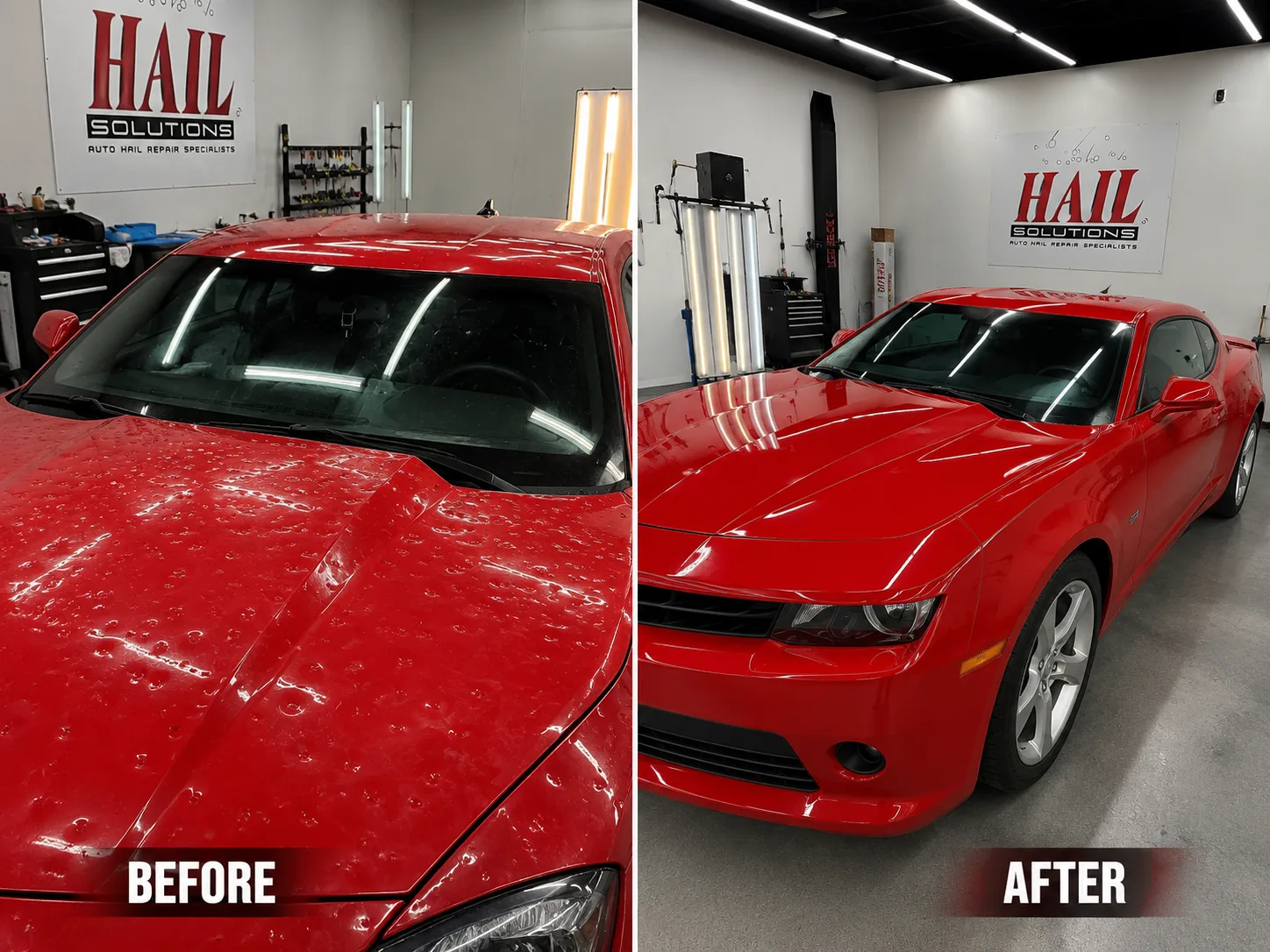
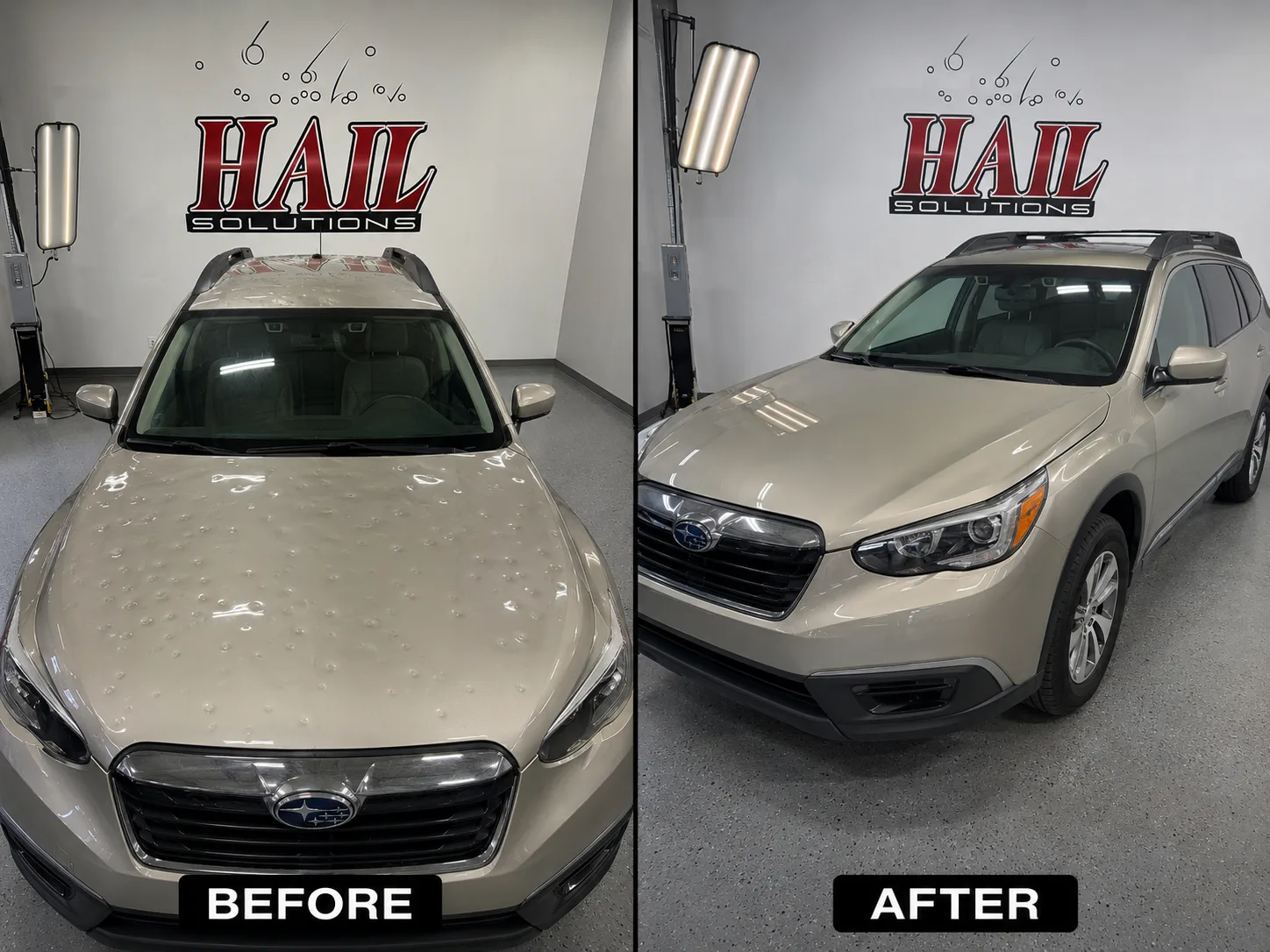
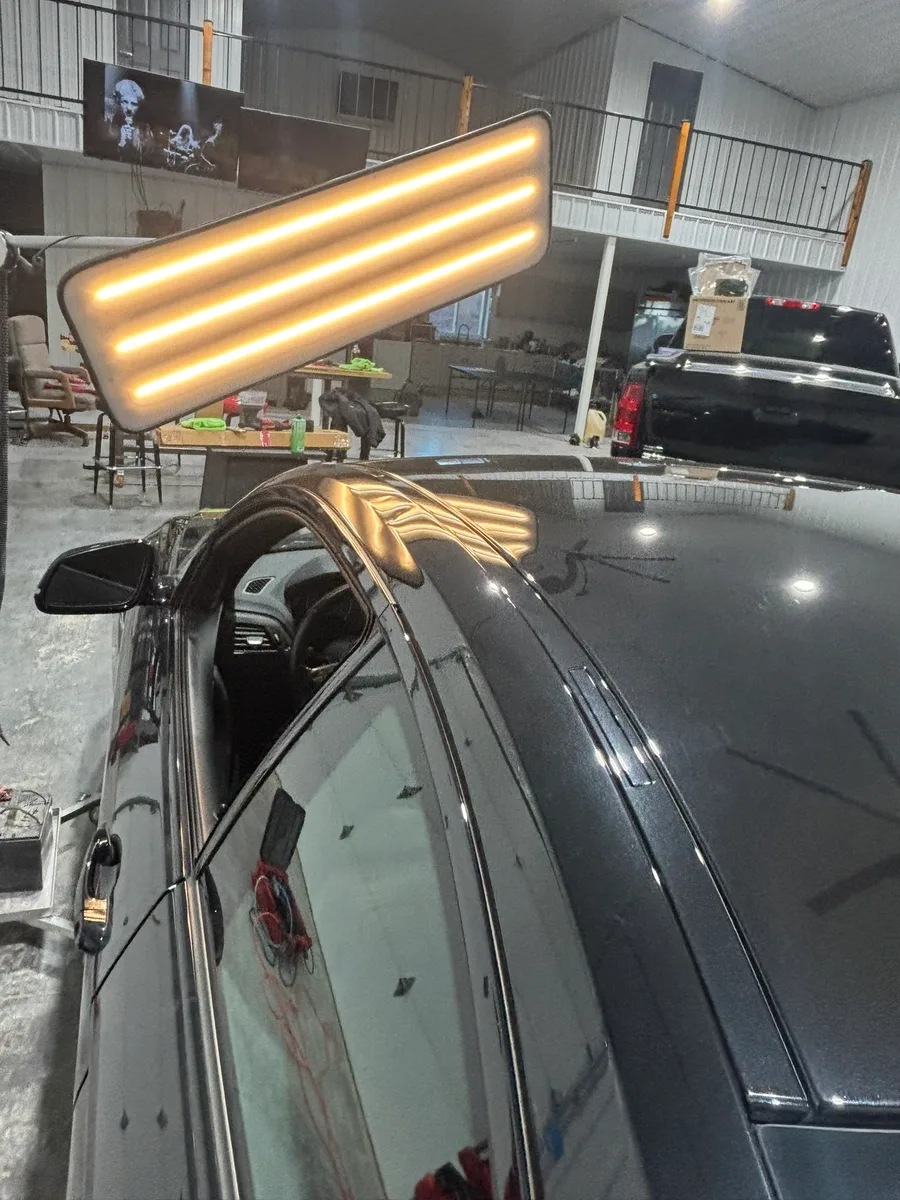
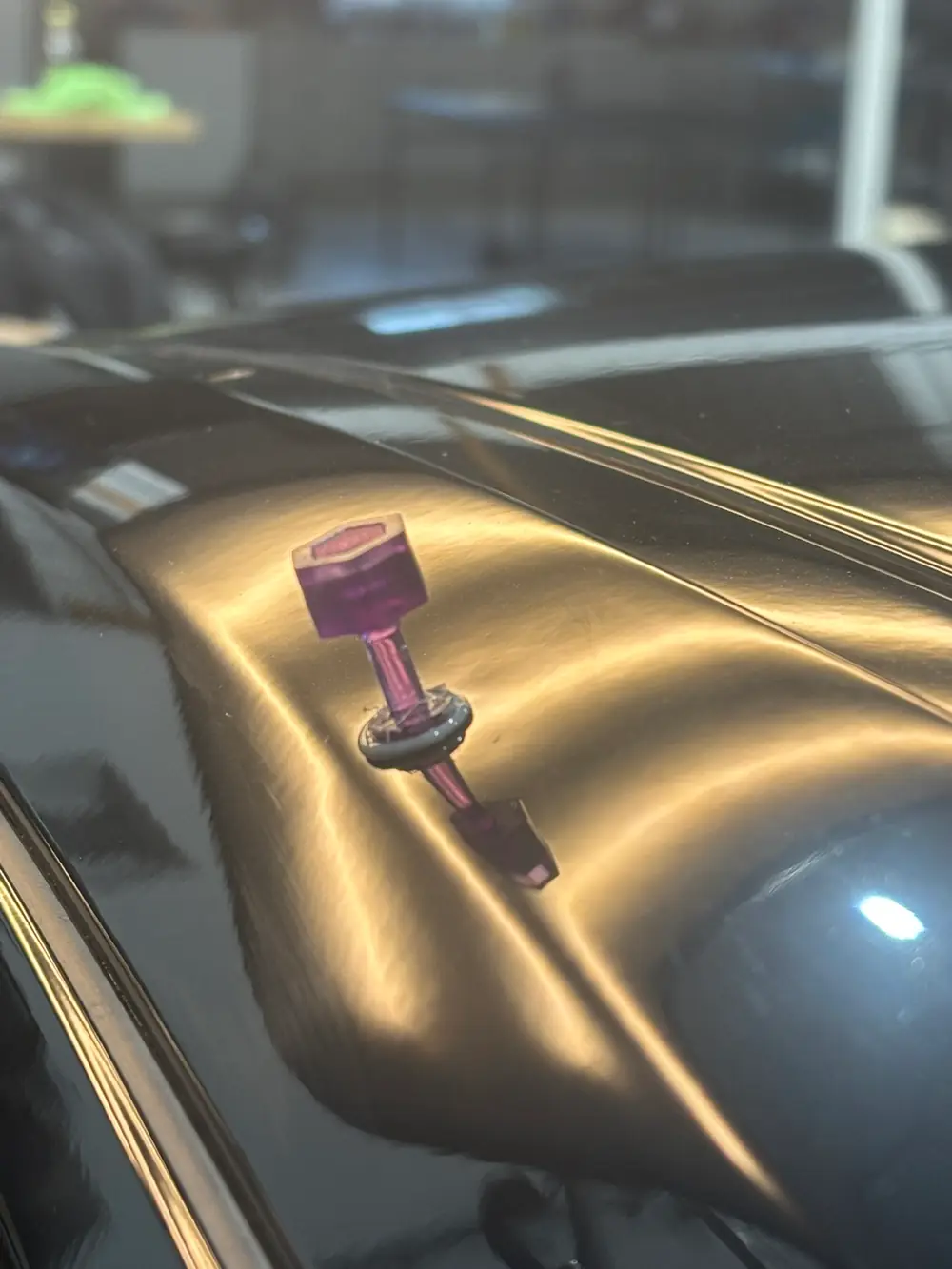
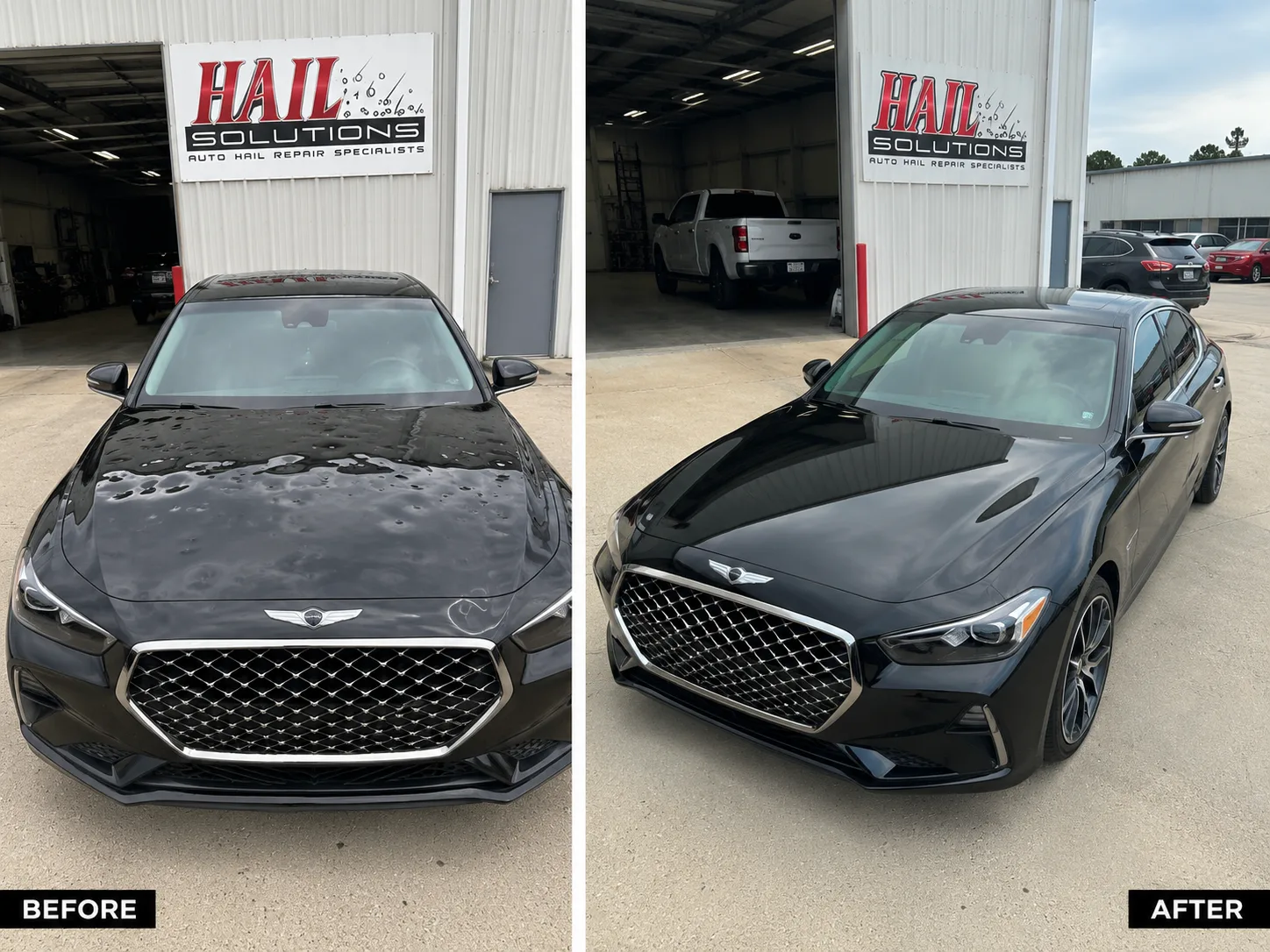
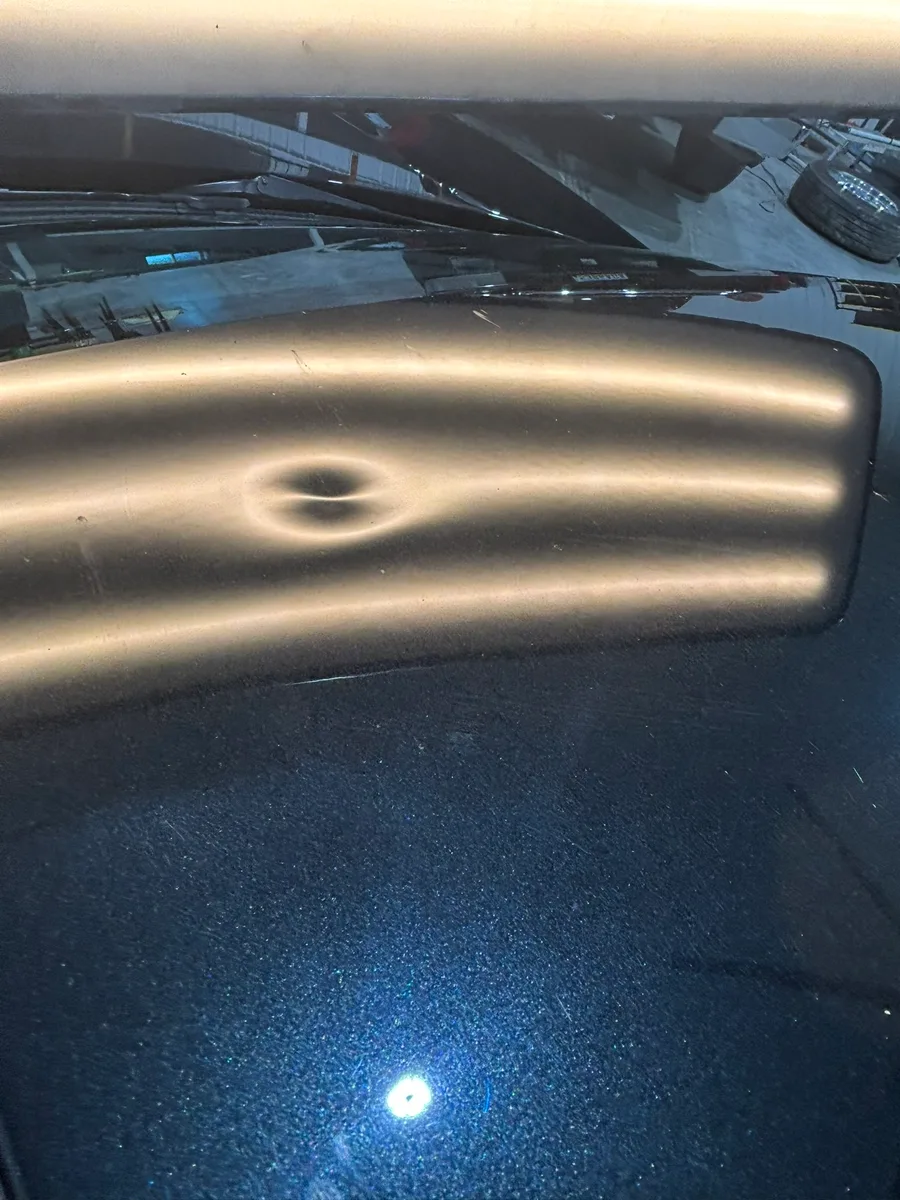
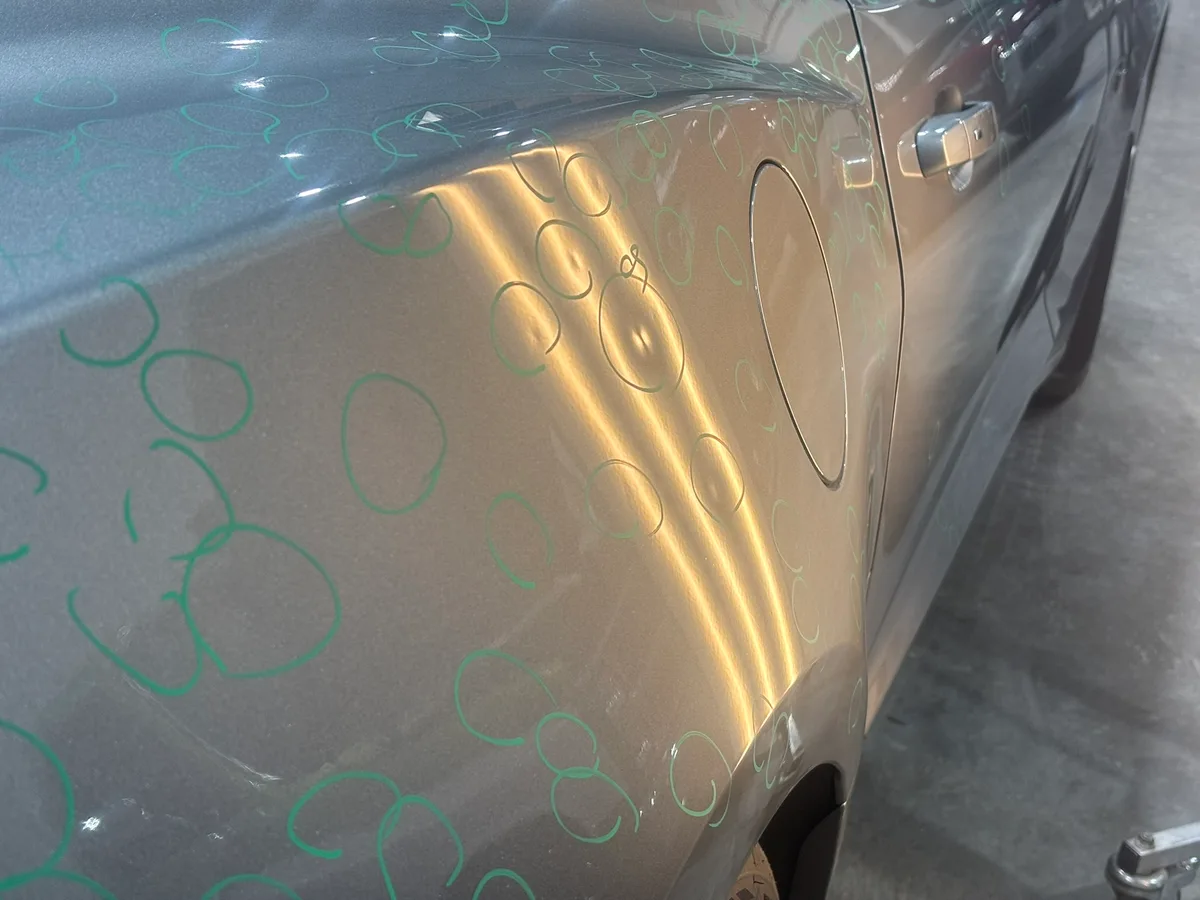
Every panel is read under a line board, every dent found and circled, then each one worked back to shape from behind — or lifted from the outside with a glue tab where there is no access. No filler, no respray, and the factory paint stays where it is.
The method in full is on the paintless dent repair page. If the count is heavy enough that someone has mentioned totaling the car, severe hail damage repair deals with that specifically.
Where your car goes from here
Sixty-six miles does not change any of these answers. It only changes who is driving.
Read under the board, counted, reshaped on the original paint. What most Warrensburg cars need, whatever year they are.
On a lower-value car this conversation starts far earlier than it should. Missouri's carve-out sits in front of the math.
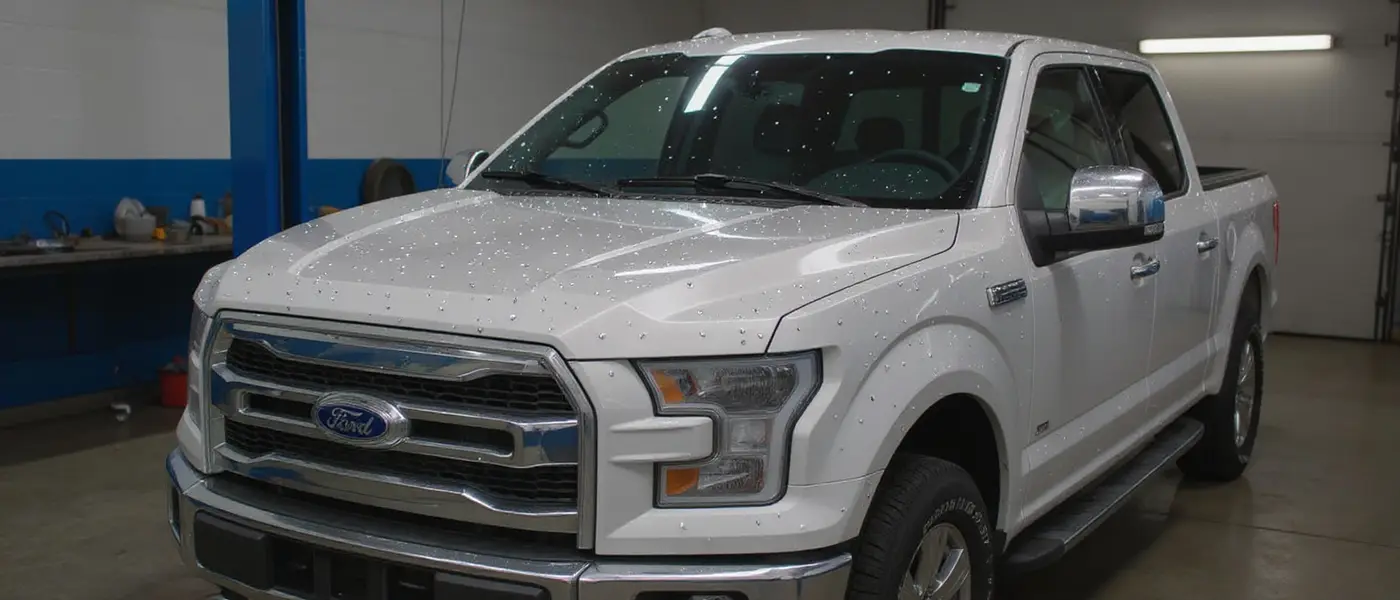
US-50 country runs on trucks. Aluminum panels take smaller corrections and carry a labor factor on the estimate.
The arithmetic, before anyone sells you anything: your real dent count against your deductible.
The road back
Warrensburg has no neighboring town on our map — its actual neighbors are not places we cover. What it has is a road. These are the stops on US-50 between your driveway and the bay door.
In their words
Visited Bryan about an estimate, instead damage was fixed and finished in less than 2 hours. Quick, fair priced and an excellent job. Highly recommended!
Was super fast getting the car in and back to me! Did a great job and our car looked amazing after he was finished. Couldn't even tell it was hailed on.
These guys are the real deal. Affordable hail dent repair that looks factory perfect. Took them less than 4 hours on my sedan. Thank you Hail Solutions.
Straight answers
Some of these have answers we can't promise, because they're decisions your insurer or a third-party database makes, not us. Where that's true, we say so.
Yes, and there is no charge for it. We collect the car, leave you a free loaner, repair it in the Olathe bay and drive it back. Warrensburg is the longest run we make and the mileage is our cost rather than a line on your estimate. If anyone quotes you a distance surcharge, that is their choice and not a rule of the trade.
Not to your claim. Your car is registered and insured in Missouri, so Missouri's rules decide what happens to it regardless of which state the bay is in. Your insurer also cannot require you to use a particular shop or make you travel unreasonably to reach one — and you are not traveling at all here, since we are the ones driving.
Sometimes, and it depends on the real count rather than the age. What is worth knowing first is that Missouri leaves hail damage out of the calculation that brands a title, so an older car being dented is not by itself a reason for anyone to write it off. Get it counted properly, then do the arithmetic against your deductible with a number that means something.
No, and we would rather say so plainly than list an address that is really a divert. There is one shop and it is at 2109 E Kansas City Rd in Olathe. We drive to you. A local-looking address that turns out to be a mailbox is a common enough trick after a storm that it is worth checking for whoever you use.
One to three days in the bay for most cars, up to about a week for heavy damage, plus the driving either side. The loaner covers all of it, so the honest answer is that you are not without a car at any point. A real timeline comes once the car is under the board.
There is nothing for it to show. The dents are reshaped rather than filled and resprayed, so the factory paint and the original panels stay on the car. No body-shop record is created and a vehicle history report has nothing to report.
Warrensburg
Photograph the car, answer a handful of questions in the free walkthrough, and you will know what to say when you call your insurer. Hand us the claim number afterwards and we will make the drive.