Paintless dent repair vs. body shop for hail damage
Only one of these keeps your factory paint and a clean CARFAX. Both can take the dents out of a hail-damaged vehicle, but they do it in completely different ways — and the difference shows up most if you plan to trade or sell in the next few years. Here is the honest comparison, including the cases where a body shop is genuinely the right call.
Free inspection at our Olathe shop or wherever your vehicle is. You file your claim — we never file it for you.
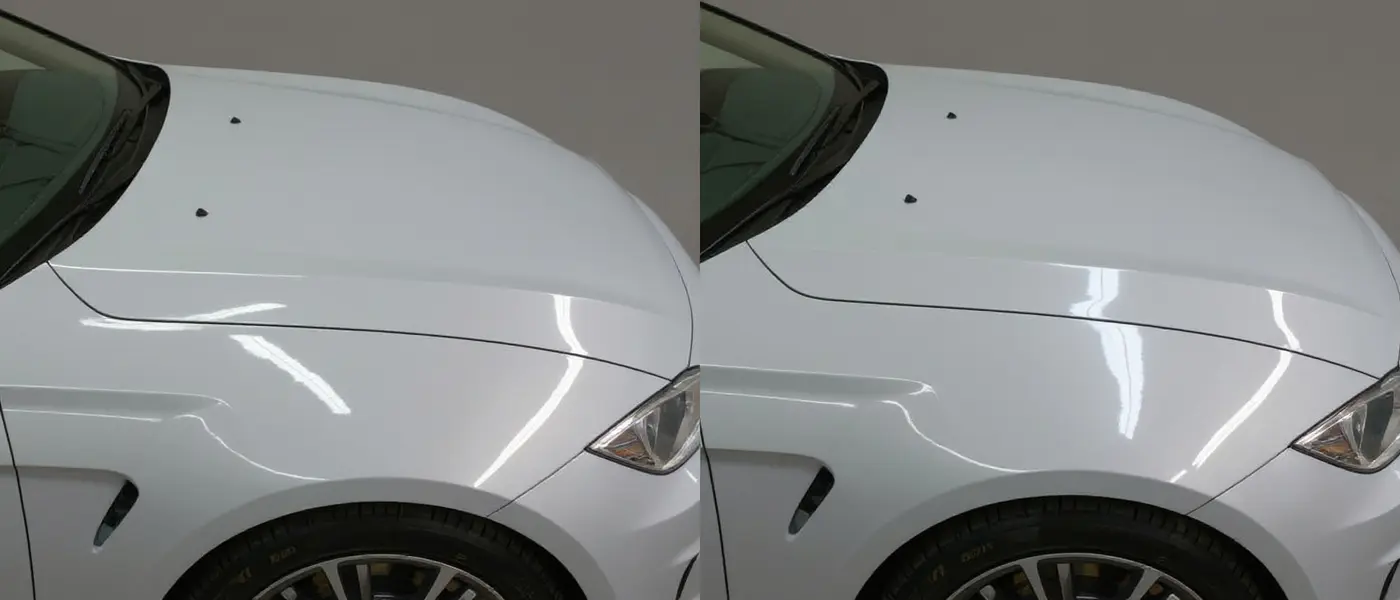
Where do the two methods actually differ on hail?
Eight things customers weigh when they choose, side by side. The short version: paintless dent repair wins on paint, history, and time whenever the metal is dented but the finish is intact — which is most hail damage.
| What you're weighing | Paintless dent repair | Body shop |
|---|---|---|
| Factory paint | Stays untouched — never sanded or sprayed | Sanded to bare metal, primed, repainted |
| CARFAX record | None — no paint or panel work to report | Body-repair flag, filed permanently |
| Shop time, moderate hail | 1–3 days | 2–4 weeks typical |
| Resale at trade-in | No measurable reduction | 5–15% lower with a body-repair flag |
| Cost on hail specifically | Lower — no filler, paint, or booth time | Higher — filler, paint, labor, and bake cycles |
| Rental days you use | 1–3 | 2–4 weeks |
| Warranty | Lifetime on the paintless dent repair work | Typically a one-year paint warranty |
| Right method when paint is intact | Yes — the standard for hail | Reserved for cracked paint or creased edges |
How does each repair actually happen?
Two methods, two genuinely different processes — which is why the timeline, the cost, and the CARFAX outcome all diverge.
The paintless dent repair process
Each dent is pushed back to its factory contour from behind the panel — the paint is never touched.
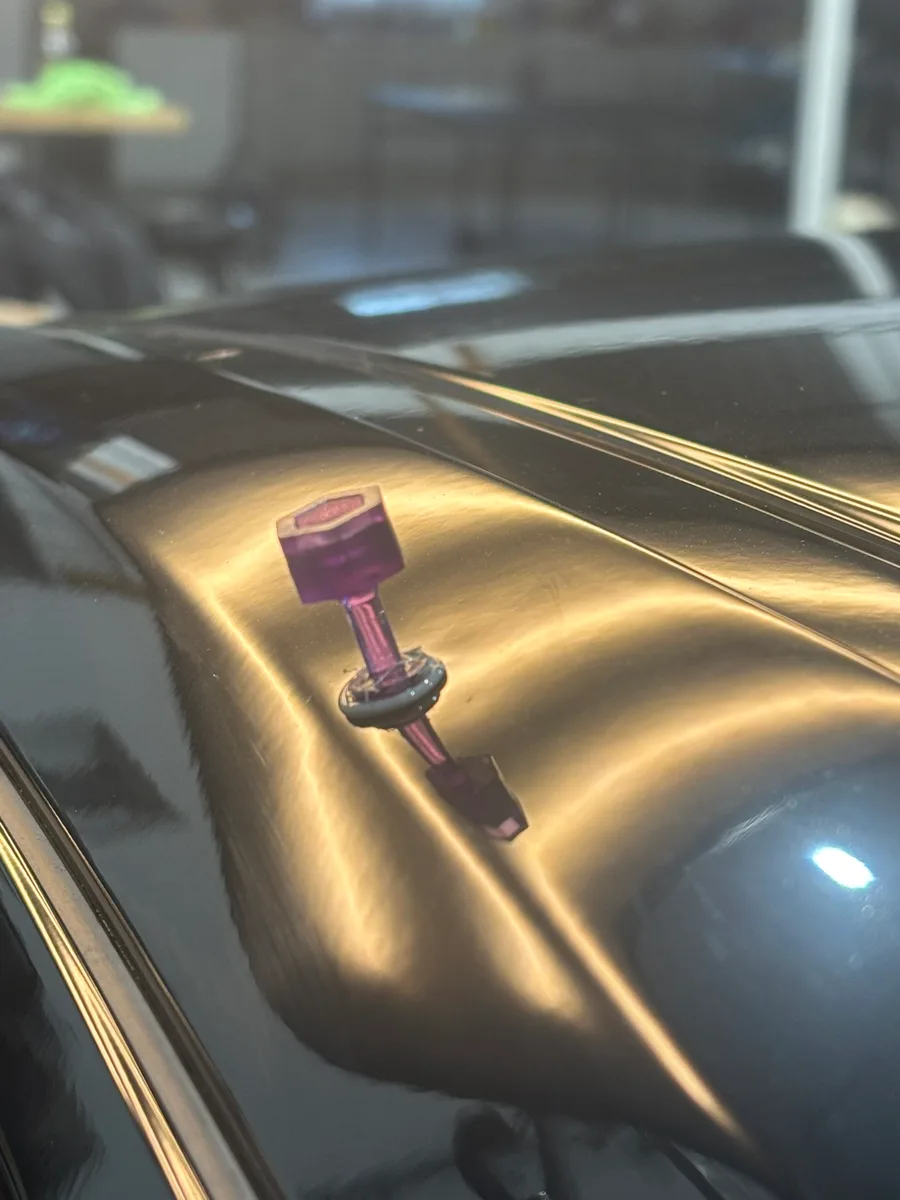
- Reach the back of the panelThe technician accesses the rear of the damaged panel through existing body openings, after removing trim, a door card, or the headliner.
- Work each dent with precision rodsRods that run from six inches to five feet long push the metal back to its factory contour, one dent at a time.
- Where there's no rear access, glue does the pullingOn double-walled panels a tab is bonded to the outer skin with hot-melt glue, pulled with a slide hammer, and any high spot is tapped down.
- Factory paint stays factoryNo sanding, no filler, no respray — nothing that would ever post to a vehicle history report.
The body-shop process
Every damaged panel is ground, filled, painted, and baked — which is where the weeks and the CARFAX flag come from.
- Grind to bare metal and fillThe technician grinds the damage down, applies body filler, and sands it smooth.
- Prime, match, and sprayPrimer goes on, the factory color is matched, and two or three coats are sprayed.
- Clearcoat and bakeClearcoat is added and the panel is cured in a heated booth.
- Severe or cracked paint means replacementThe shop cuts out the panel and welds in a new one before the paint cycle begins.
The built-in primer-cure and bake times — stacked across every painted panel — are why body-shop repairs stretch into weeks.
Why does the gap matter most on time, CARFAX, and paint?
Three places where the difference between the two methods is widest — and where it touches your wallet directly.
Timeline: days versus weeks
Paintless dent repair on moderate hail takes one to three days of shop time. There is no drying, curing, color-matching, or reassembly of freshly painted panels — the vehicle comes in, each dent is worked from behind, the trim goes back on, and it leaves. Even severe damage with hundreds of dents usually stays under a calendar week.
Body-shop repairs run two to four weeks for the same damage because every repainted panel needs primer cure time, booth scheduling, clearcoat, and a bake cycle, and those waits stack across panels. That timeline maps straight to the rental days you use — and rental coverage typically caps around 30 days, so a long body-shop job eats into it.
What a CARFAX body-repair flag costs you
CARFAX records body-shop work permanently. A panel replacement, structural repair, or repaint posts to the vehicle history report for life, and dealers check it on every trade-in. A body-repair flag typically trims the offer by five to fifteen percent — on a $40,000 SUV, that is $2,000 to $6,000 you do not get back.
Paintless dent repair leaves no record because no panels are replaced, no paint is applied, and no filler is used. The repair is simply invisible to the vehicle's history.
Why factory paint is worth protecting
A factory finish is the one part of the paint no shop can recreate. Paintless dent repair preserves it completely, so the panel ages with the rest of the vehicle and there is no respray to fade or diverge over time. For anyone who plans to keep resale value, that is the quiet difference that outlasts the repair itself.
When is a body shop genuinely the right call?
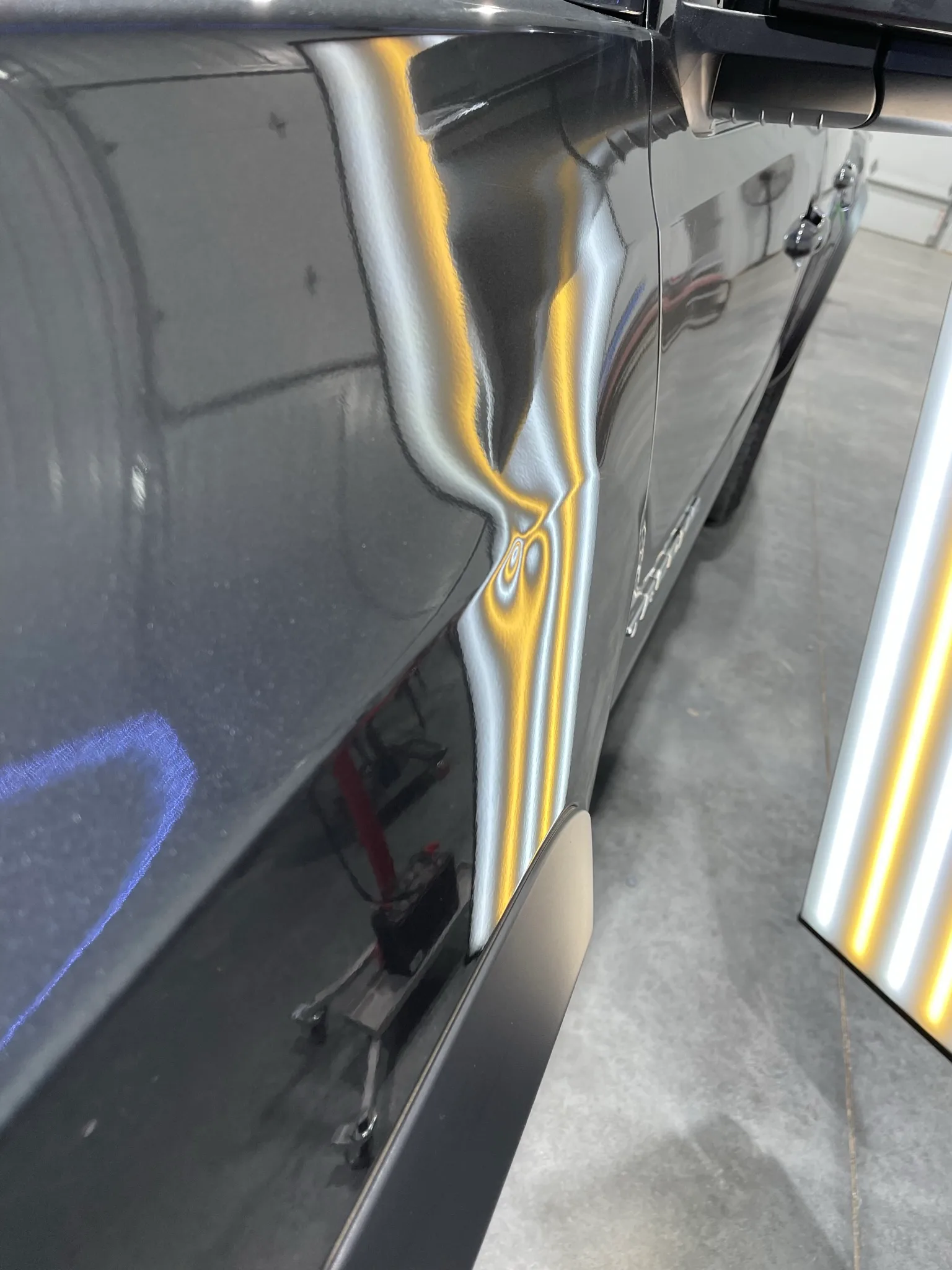
Paintless dent repair has real limits, and a shop worth trusting tells you where they are. About one in twenty hail-damaged vehicles we inspect belongs at a body shop — here's how to know.
The paint is cracked or chipped
Hail that breaks the paint surface — not just dents the metal under it — cannot be restored from behind the panel. Cracked or chipped paint needs a body shop to sand, fill, prime, and respray. Paintless dent repair only moves metal; it does not rebuild a paint finish.
A dent sits on a sharp body line or folded edge
Where hail creases the metal over a factory body line or a panel edge, the metal has stretched rather than flexed. Those creases often will not return to factory contour from behind, so a body shop is the honest answer for that panel.
The panel was already filled before
A panel previously repaired with body filler cracks under the pressure paintless dent repair uses. If a vehicle has prior filler work in the damaged area, we send it to a body shop we trust rather than risk a repair that will not hold.
Replacement is cheaper than repair
On the most severe damage, the dent count can climb high enough that replacing a panel costs less than repairing it dent by dent. When that is the case, we say so — and the math points to a body shop or panel replacement, not paintless dent repair.
If your vehicle falls into one of these, we'll say so and point you to a body shop we trust. The other roughly 95 percent of hail-damaged vehicles are candidates for paintless dent repair — factory paint preserved, no CARFAX flag, and a faster turnaround.
What does paintless dent repair look like in practice?
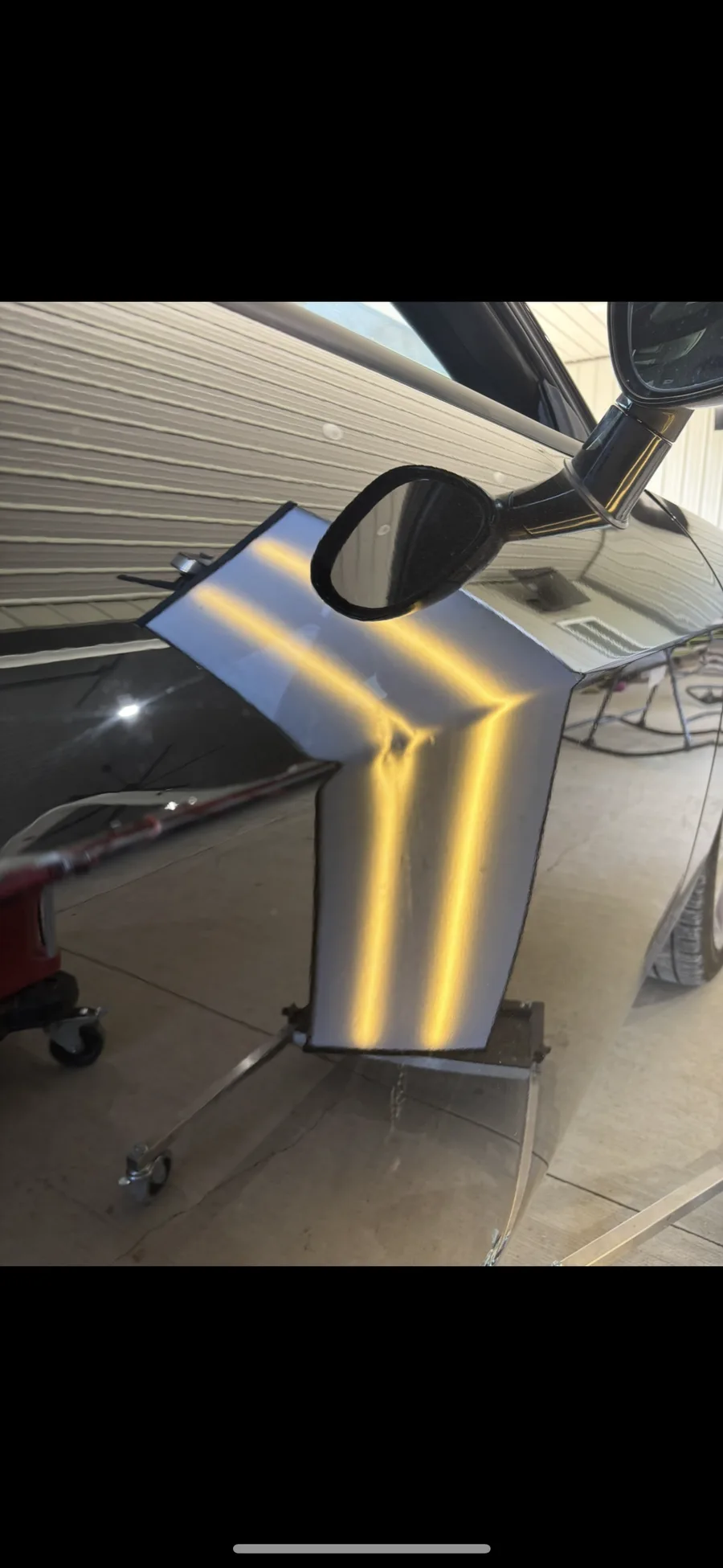
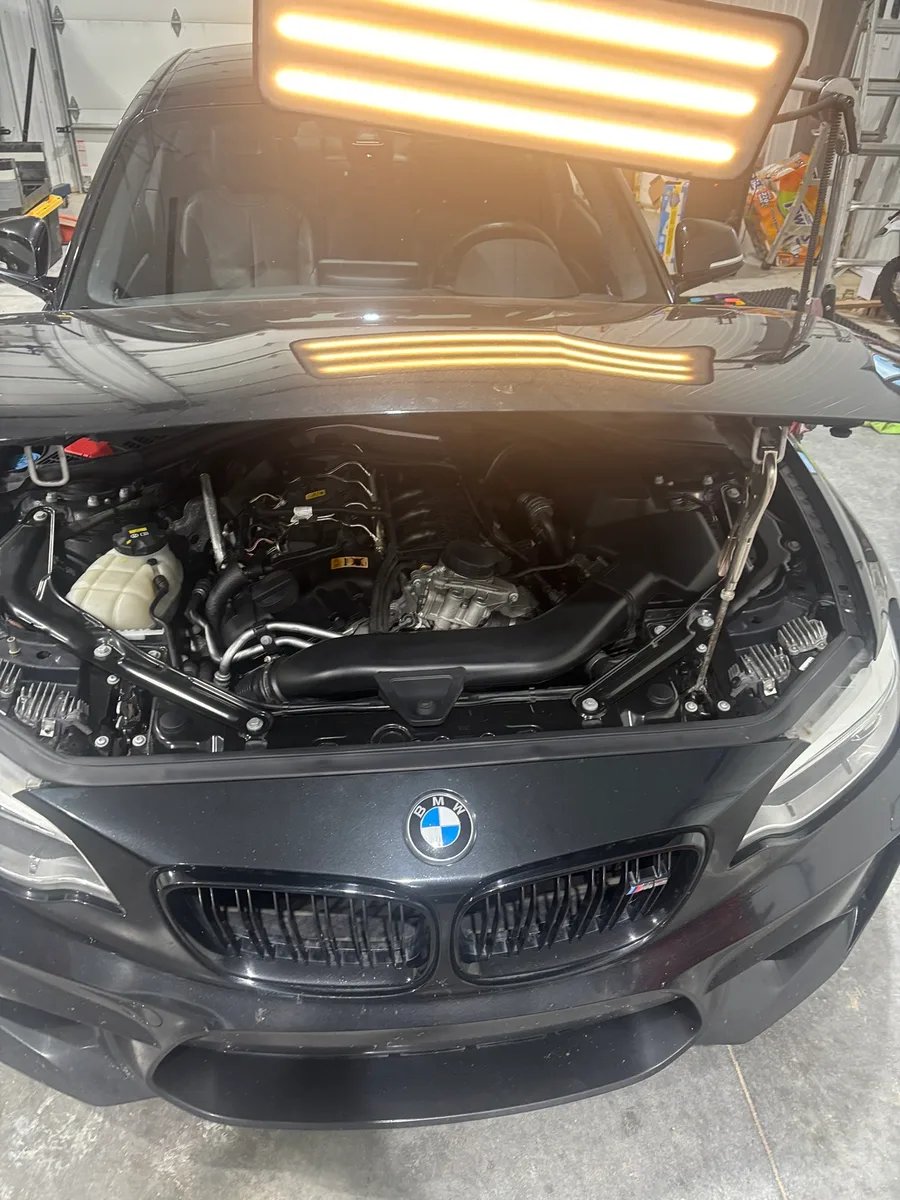
Real vehicles restored at our Olathe shop — no stock photos. More in our repair results and shop gallery.
Not sure which method your damage needs?
Bring it by our Olathe shop or send photos through the free walkthrough. We'll tell you honestly whether paintless dent repair fits — and if a body shop is the better call, we'll say that too. You file your claim; once it's approved, we handle the repair.
Choosing between paintless dent repair and a body shop
Is paintless dent repair always the right choice for hail damage?
For most hail damage, yes — but not all of it. The exceptions are cracked or chipped paint (paintless dent repair cannot restore a broken finish), dents creased over sharp body lines or folded edges, panels that were previously filler-repaired, and damage severe enough that replacing a panel costs less than repairing it. Of the hail-damaged vehicles we inspect in Olathe, roughly five percent fall into one of those categories — and we tell you honestly when a body shop is the better call.
How much resale value does body-shop repair cost me?
Typically five to fifteen percent at trade-in. Dealers run CARFAX on every used vehicle, and a body-repair flag lowers the trade-in offer by that range. On a $30,000 SUV that is $1,500 to $4,500; on a $60,000 vehicle, $3,000 to $9,000. Private-buyer impact runs about the same. Paintless dent repair generates no CARFAX record because no paint is applied and no panels are replaced.
Can a body shop match my factory paint exactly?
They can get close, not identical. Factory paint is applied in a controlled plant with curing conditions no body shop can fully replicate. A good respray matches within about 95 to 97 percent of the original — usually invisible at first, though repainted panels can age and fade at a different rate than the rest of the vehicle. Paintless dent repair keeps factory paint factory, so the match question never comes up.
My insurer is steering me toward their preferred shop. Is that a body shop?
Most insurer preferred shops on the network are body shops. The direct-repair system grew up around traditional collision work, and many networks still default to body-shop repair on hail. You are not required to use one — Kansas and Missouri anti-steering rules protect your choice of shop, and your carrier pays the same either way.
Is paintless dent repair more expensive than a body shop?
On hail specifically, it is usually less. A body shop has to grind, fill, sand, prime, paint, blend, and bake each panel — eight or more hours of labor plus materials. Paintless dent repair works the same panel by hand in one to three hours with no paint or filler. Across a full-vehicle hail repair, that often lands roughly 30 to 40 percent under the body-shop equivalent, which is one reason carriers approve paintless dent repair when the damage profile allows it.
Do I have to file my own claim to use paintless dent repair?
You file your claim — we never file it for you. The claim is yours; we hand you the exact script for your carrier and a summary of your photos and vehicle details so the call is simple. Once your claim is approved, we coordinate the repair: free pickup and delivery across the Kansas City metro, factory paint preserved, and a lifetime warranty in writing.
Read this before you file
Learn the process on your own terms.